



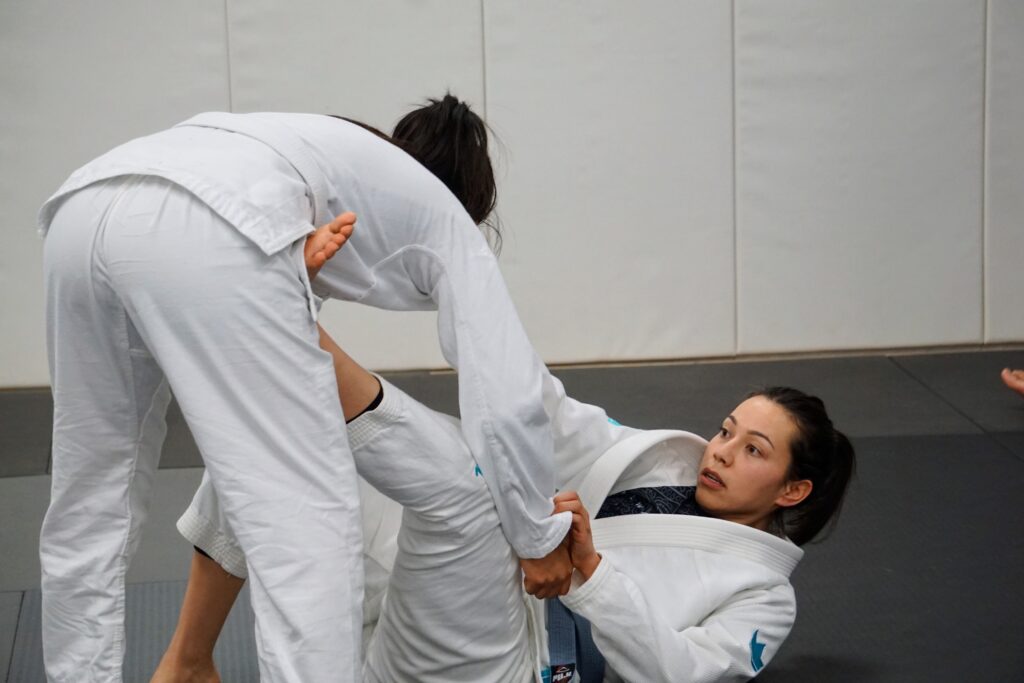
Many beginners think speed equals progress. But in reality, moving too quickly makes techniques feel harder, not easier. In La Quinta, we often coach students to slow down, breathe, and allow their bodies to learn the movement naturally.
When beginners go too fast, they:
- miss important details
- rely on reaction instead of skill
- lose balance or control
- feel frustrated when things don’t “click”
Fix:
Focus on smooth, not fast.
Ask yourself:
“Can I do this movement calmly and in control?”
If not, slow it down until you can.
Mistake #2 — Tensing Up Instead of Staying Relaxed
Tension is one of the biggest obstacles beginners face. When you tighten your shoulders, grip too hard, or hold your breath, your body wastes energy and your technique becomes less effective.
Tension often shows up as:
- stiff posture
- squeezing too hard
- rushing movements
- freezing under pressure
Fix:
Relax your shoulders, loosen your grip, and breathe consistently.
A relaxed body learns faster — and performs better.
Mistake #3 — Feeling Embarrassed About Not Knowing Something
Many La Quinta beginners start out worried they’ll look inexperienced or “do something wrong.” But jiu jitsu is a learning art — not something anyone expects you to be perfect at.
Beginners sometimes avoid asking for help because they:
- feel shy
- don’t want to interrupt
- assume others are learning faster
- worry about standing out
Fix:
Remember this truth:
Every black belt once asked the same questions you have right now.
Your coaches and teammates want to help you succeed.
Asking questions shows commitment — not weakness.
Mistake #4 — Trying to Win Instead of Trying to Learn
In early training, many beginners treat every roll like a competition. But this mindset creates tension, limits your learning, and increases frustration.
When beginners focus too much on “winning,” they often:
- ignore technique
- resist learning new positions
- overuse strength
- miss opportunities to grow
Fix:
Shift your mindset from winning to understanding.
Think of rolling as an experiment:
- Try new escapes
- Explore new positions
- Allow mistakes
- Practice staying calm
The more you learn, the more your skills develop naturally.
Mistake #5 — Expecting Progress to Be Immediate
Jiu jitsu progress is often slow, subtle, and nonlinear — especially at first. Beginners sometimes feel discouraged when they don’t improve quickly or when a move still feels confusing after several classes.
But progress shows up in ways beginners don’t always notice, such as:
- breathing better
- staying calmer
- recognizing positions
- reacting more thoughtfully
- improving balance
- being more consistent
Fix:
Track progress through habits, not outcomes.
If you’re calmer, more aware, and showing up regularly — you are improving.
Growth is gradual, but powerful.
Bringing It All Together — How La Quinta Beginners Build Real Skill
Correcting these common mistakes helps new students feel more comfortable and confident much faster. At Six Blades La Quinta, we remind new students that:
- mistakes are expected
- questions are encouraged
- progress is personal
- consistency matters more than perfection
The most successful students are not the strongest or the fastest — they are the ones who stay curious, relaxed, and open to learning.
When you let go of pressure and embrace the process, jiu jitsu becomes far more enjoyable — and progress comes naturally.